Want to be in the loop?
subscribe to
our notification
Business News
APARTMENT MARKET IN TWO MAJOR CITIES RISING
According to property service provider CB Richard Ellis (CBRE) Viet Nam's report on Ha Noi property market in the last quarter of 2015, the average consumer price index (CPI) grew 0.63 per cent this year, which is the lowest level since 2001, and fell way below the annual average level of 5 per cent recently.
This low level of the inflation rate supported the growth of consumption and investment level in 2015. Similarly, the low mortgage rate also supported activities in the real estate market last year. Credit growth improved in 2015, recording 18 per cent, significantly higher than the 12 per cent to 14 per cent average level in the 2012 to 2014 period, according to the State Bank of Viet Nam.
Although the interest rate in Viet Nam has increased slightly after the United States Federal Reserve hiked its interest rate in late December, it is forecast that Viet Nam will not expect a drastic change in interest rates in 2016, since most of the effect has already been factored in the interest rate's current value.
This is good news for real estate investors as this real estate investment has been proved to yield better returns than other types of investments such as currency, gold, oil, or government bonds, in recent years. It is likely that more fluctuations will happen in these markets in 2016.
Housing transactions in Ha Noi last year hit a record 21,100, surpassing the sector's peak in 2009, according to CBRE Viet Nam. High-end apartment transactions accounted for 32 per cent of the total, up from 20 per cent in previous years.
A number of property investors have sped up delayed projects. Several apartment projects have been restructured in both size and price in accordance with market demands.
The mid-end and low-cost apartment transaction rate was down compared to 2014, however, it still accounted for a large share of the total sales due to reasonable pricing.
In 2015, about 28,300 apartments were put on the market in Ha Noi, up 70 per cent compared with the previous year. High-end apartments accounted for 28 per cent of the total share compared to the peak of 21 per cent in 2009.
Average prices of new projects increased between 3 per cent and 5 per cent year-on-year (YoY), and even the prices rose between 5 per cent and 7 per cent for high-end projects, Nguyen Hoai An, CBRE Viet Nam's vice director in its Ha Noi branch said.
Last year also marked a firm recovery in HCM City's housing market with strong launches, positive sales volume and improved prices, particularly for mid- to high-end properties.
More than 41,900 condominiums were launched in 78 projects, mostly in the east (47 per cent) and south (27 per cent) of the city, an increase of 122 per cent YoY, according to a quarterly report of CBRE Viet Nam on HCM City market.
It was the highest ever in a single year, due to the introduction of Vinhomes Central Park in Binh Thanh District and Masteri Thao Dien in District 2, as the continued positive market momentum boosted the confidence of developers.
Overall, market sentiments remained positive throughout the year as 2015 ended with record sales for a single year – an estimated 36,160 units and up 98 per cent YoY.
These included sales to individual buyers and en-bloc sales to institutional investors and property agents, in which sales to individual buyers were estimated at 33,348 units, up 83 per cent.
According to Savills Viet Nam, in HCM City market, apartments saw the highest new supply and transaction volume in the quarter. Around 11,800 units were launched from 17 new and another seven existing projects, up 20 per cent quarter on quarter (QoQ) and over 100 per cent YoY.
This was the largest new supply by a quarter over the last five years. Almost 7,700 units found buyers, up 47 per cent QoQ and 86 per cent YoY.
Projects with good locations, investment opportunities, developed infrastructure and comprehensive urban planning attracted buyers' attention, Savills Viet Nam said.
In the future, the new exchange rate mechanism that was applied from December 2015 would not make any remarkable impact on the Vietnamese real estate market, An said.
The Vietnamese dong remains stable compared to other foreign currencies in the region, she explained, adding that Vietnamese still account for 90 per cent of investors in the real estate sector, and domestic capital flows dominate the market.
According to the CBRE experts from Singapore and Hong Kong, Viet Nam's exchange rates remain stable and positive among other Southeast Asian countries.
They attributed the attractiveness of Viet Nam's property market to a growing population that has led to increased demand for housing.
Meanwhile, with the revised Law on Housing and Law on Real Estate Business coming into effect from July 1, 2015, the market recorded a certain level of interest from foreigners in major high-profile projects by reputable developers in both Ha Noi and HCM City, according to CBRE Viet Nam.
As the market is developing towards a more open and internationalised environment, while overall pricing is still attractive as compared to other matured markets, it is expected that more foreign buyers will look into Viet Nam market as more guiding laws are issued to foster investment activity.
Both homebuyers and developers need to prepare for a changing market with evolving laws and regulations: Compliance and transparency are important in managing these changes.
The demand growth on the domestic property market will remain positive this year, supported by continued strong investor sentiment and the availability of housing credit, according to property consultancy Jones Lang LaSalle (JLL) Viet Nam.
Source: VIR
Related News

INFRASTRUCTURE / CONSTRUCTION / LOGISTIC / PORT
VIỆT NAM-CAMBODIA TRADE GATHERS PACE TOWARDS $20 BILLION TARGET
Trade between Việt Nam and Cambodia continues to grow, remaining a bright spot and a key pillar of bilateral cooperation as the two countries aim to raise two-way trade to US$20 billion in the coming years. After setting a record of more than $11.3 billion last year, bilateral trade reached about $8.7 billion in the first eight months of this year, up 8.3 per cent year on year.
TECHNOLOGY
AI BEGINNING TO RESHAPE RECRUITMENT CRITERIA
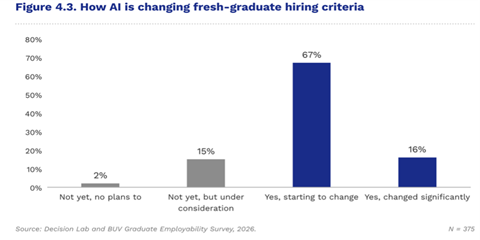
Digital literacy is the only capability area in which fresh graduates meet employers’ expectations, according to a new report. Yet, it is also the standard rising fastest, as businesses increasingly expect new hires to use AI effectively in the workplace. Some 83 per cent of employers say AI has changed, or is beginning to change, their hiring criteria, while 94 per cent report higher expectations for digital and AI capabilities than they had two to three years ago.

INFRASTRUCTURE / CONSTRUCTION / LOGISTIC / PORT
ĐÀ NẴNG GREEN-LIGHTS US$105 MILLION THAI DEVELOPMENT DEAL
The central city has approved an investment proposal by Thailand’s WHA Group to develop infrastructure for the 400ha WHA Đà Nẵng Industrial Park project on two communes of Thăng Bình and Đồng Dương, with an investment of more than VNĐ2.7 trillion (US$105 million). The city said it approved WHA Industrial Development International's status as an investor in the project, which is expected to take place between 2027 and 2034.

VIETNAM ECONOMY INVESTMENT
MOBILE PHONE EXPORTS RISE 20% TO $51.8 BILLION IN FIRST NINE MONTHS
Exports of mobile phones and components rose 20 per cent year-on-year to nearly US$51.8 billion in the first nine months of 2026, with China, the US and Republic of Korea accounting for more than half of the total. Shipments to the three markets reached a combined $26.18 billion, or 50.6 per cent of total exports of the product group during the period, according to data from the Vietnam Department of Customs under the Ministry of Finance.

VIETNAM ECONOMY INVESTMENT
FRUIT AND VEGETABLE EXPORTS POISED TO HIT $10 BILLION IN 2026
Fruit and vegetable exports are on track to reach nearly US$10 billion in 2026, after rising 19.9 per cent year on year to nearly US$7.4 billion in the first nine months, driven by strong seasonal demand and abundant tropical fruit supplies. The Ministry of Agriculture and Environment said the growth reflected stronger international demand for fresh produce and processed agricultural products.
GARMENT / TEXTILE
TEXTILE EXPORTS FACE DUAL CHALLENGES OF SUSTAINING ORDERS AND BOOSTING EFFICIENCY AMID GROWING COMPETITION
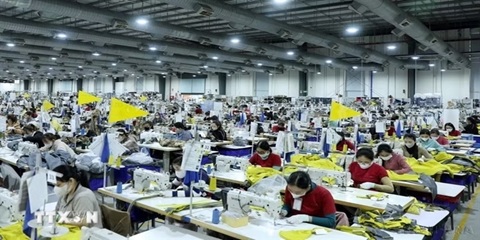
Data shows that the textile and garment sector maintained its growth momentum in the first nine months of this year. The industry's total export turnover reached an estimated US$35.721 billion in the first nine months of this year, up 3.3 per cent year-on-year. Despite posting encouraging export figures, Vietnamese textile and garment enterprises continue to navigate unpredictable market variables.
Events Sponsors






















